
Something is living in your chimney
Scratching, flapping, chirping or a low rumble above the damper. Here is how to tell what it is, what we can do today, and the one case where nobody is legally allowed to remove it.
What the sound usually means
Whatever it is, stop using the fireplace. A blocked flue pushes smoke and carbon monoxide back into the room, and lighting a fire under a live animal is the version of this story that ends badly for everyone.
The one we are not allowed to touch
Chimney swifts are protected under the federal Migratory Bird Treaty Act. While a nest is active, removing it is a federal offence — not a guideline, an offence, with fines that start at five figures. Permits exist and are almost never granted. Swifts nest one brood a season, the young fly in a few weeks, and then the chimney is yours again.
So if that is what you have, we will tell you, we will confirm it from the top, and we will book the cap for the week after they leave. Any company that offers to clear an active swift nest today is either lying about what is up there or breaking federal law on your property, and both of those become your problem, not theirs.
What we do about it
- Come out and find out what is actually in there, from the top and from the firebox
- Tell you what it is, whether it is alive, and whether it is legal to move it
- Clear nests, debris and blockage where the flue is clear to work on
- Bring in a licensed wildlife control operator when live animals need trapping — that is a permitted trade in Washington and we are not it
- Sweep the flue and run a Level 1 inspection once it is empty, because nests leave more behind than nests
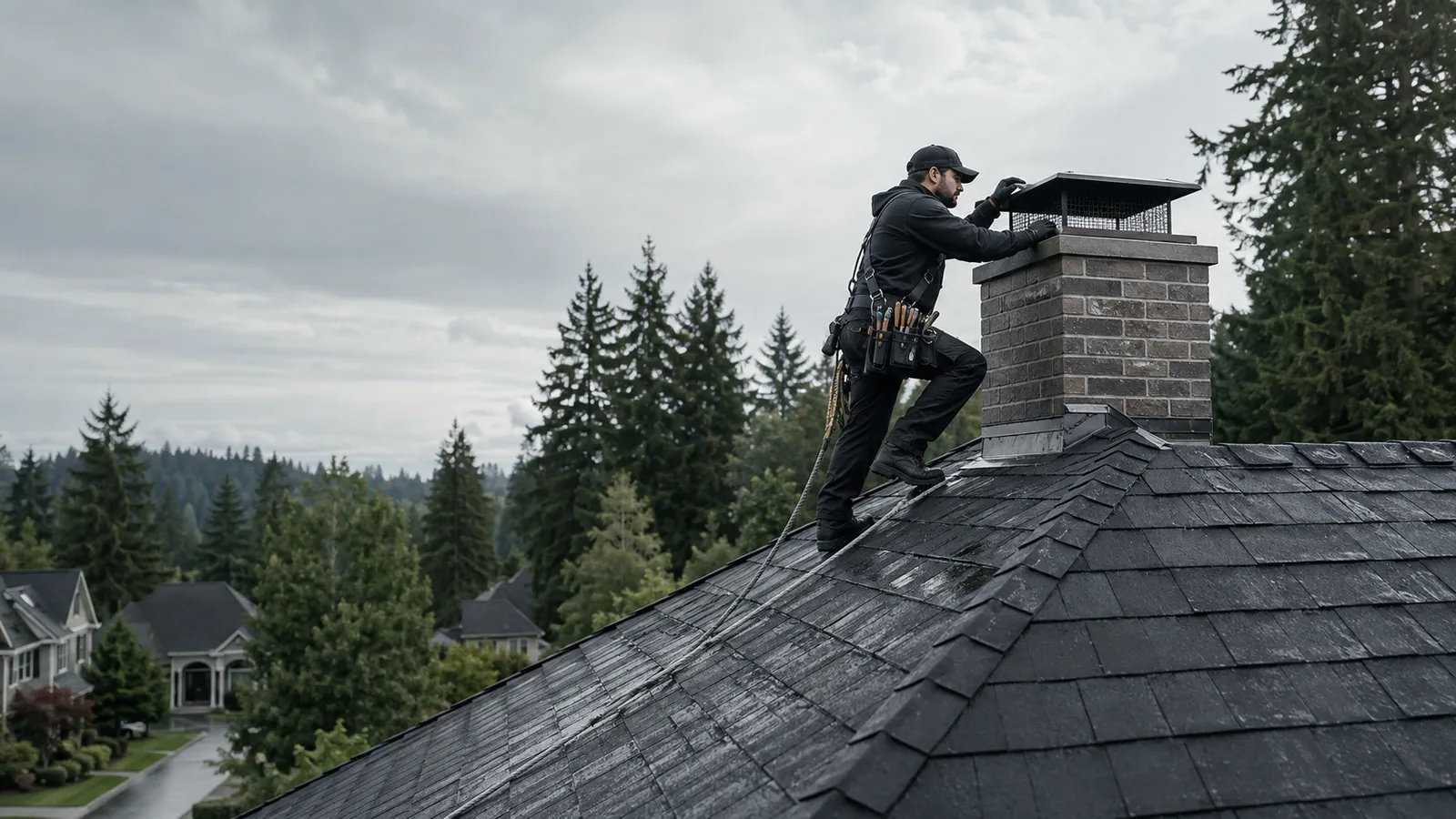
- Cap the flue and close the other entry points so it does not happen a third time
The cap is the part that actually ends this. Everything above it is cleanup.
What it costs
Puget Sound market ranges, 2026 — published so you can check any quote against them, ours included.
How fast we can be there
Call and we will tell you honestly when we can be at the house — today if the schedule allows it, and the real day if it does not. We would rather give you a time we can keep than a promise that sounds better on a website.
Questions about animals in the chimney
There is a bird loose in my living room. What now?
Can I just light a fire and smoke it out?
How did it get in? I have a cap.
What if the animal is already dead?
Will a cap keep everything out?
Tell us what you are hearing.
Describe the sound and when it started — that alone usually tells us what is up there and what it is going to take.